THANKS TO OUR SPONSOR!

THANKS TO OUR SPONSOR!
Your Ad here
Be sure to sign up for the weekly RV Travel Newsletter, published continuously every Saturday since 2001. NOTE By subscribing to RVTravel you will get info on the newest post on RV Tire Safety too
. Click here.
Huge RV parts & accessories store!
You have never seen so many RV parts and accessories in one place! And, Wow! Check out those low prices! Click to shop or browse!

Friday, December 31, 2021

Valve Extensions come in two 'Flavors"

 Valve stem extensions come in two "flavors". One being a longer metal stem the other is some sort of "extender" that screws onto the end of a standard stem.

If you chose the long metal stem route, you probably should have them installed by a tire shop that services Heavy trucks as they have the experience and should know how to install properly. The stem for the inner tire can be straight or almost straight but needs to be long enough to come through the outer wheel "hand hole".  The long stem may look like this one.
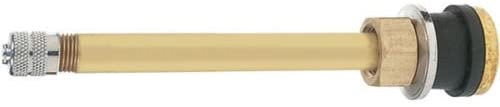

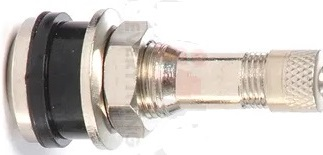
The outer stem can be a regular brass stem like this one.


it will help if you have a "dual foot" inflator tool. Like this.
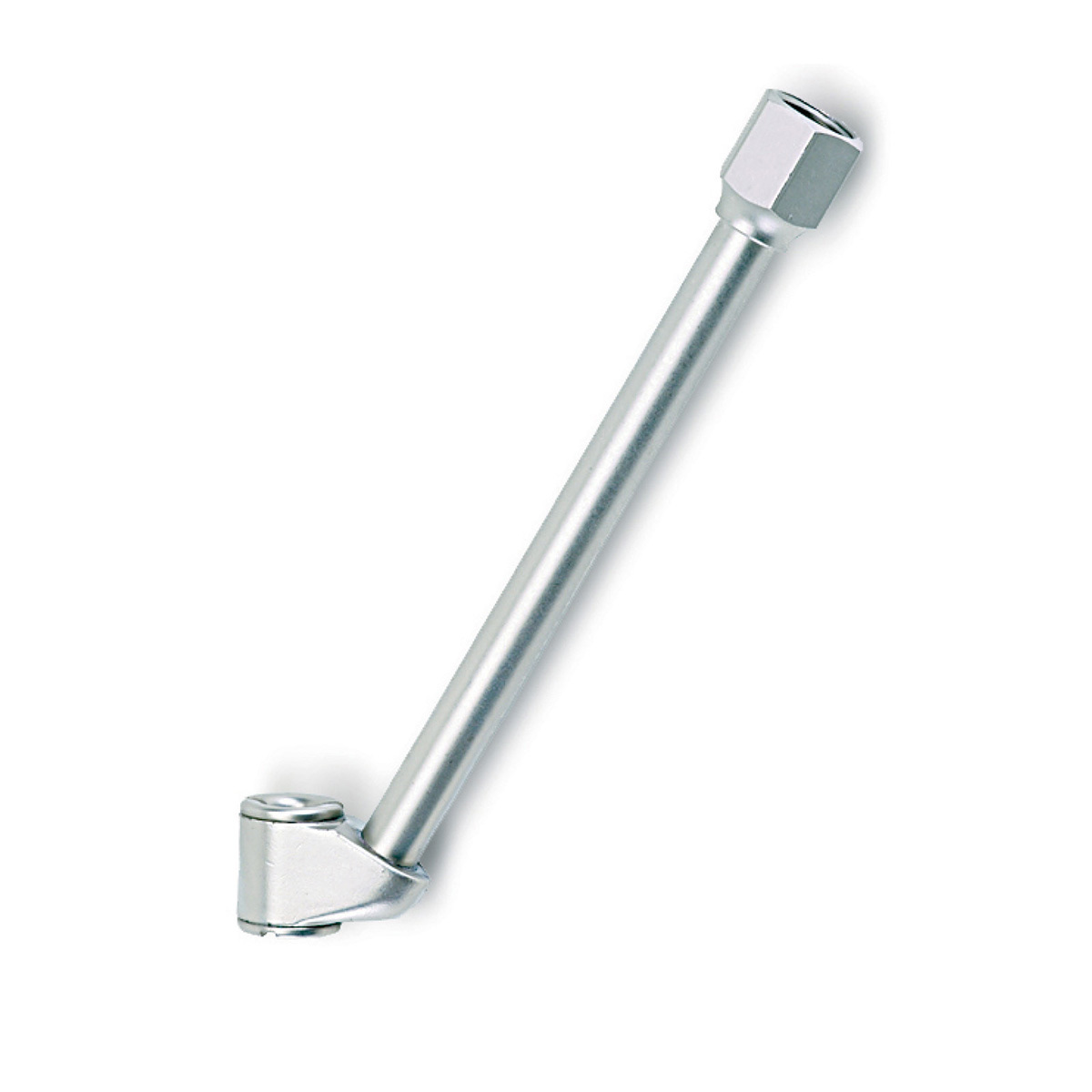
  If you have short metal stems as shown above and a "Dual-Foot" inflation adapter you should be able to get to both the inner and outer short stems. One end you Push on the inner tire. The other end you Pull onto the valve for the outer tire.

The above doesn't answer the question for those that use TPMS or want easy access to allow measurement of tire pressure. You can use the "other flavor of extender", a flexible "Hose" extenders BUT you REALLY need to pay attention to the following:

1. Be sure to tighten the hose properly. That means no leaks (test with some soapy water) and not over-tighten.  I screw the hose on till the air stops leaking then tighten about 3/4 to 1 additional turn. I then check and confirm no air leak.

2. The outer end needs to be SOLIDLY attached.  I use pop-rivets and the small 'L" bracket that comes with the Wheel Master stainless steel hose kit (#8001 or #8005 depending on wheel diameter). Like this. (shown with TPMS sensor)
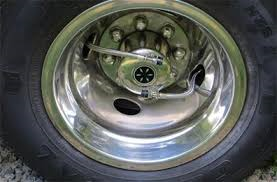

3. When adding air you should hold the hose so you are not loosening the attachment point as pushing an air chuck or pressure gauge on an extender can generate a lot of force which can bend or loosen the attachment.

4. Do Not over-tighten the hose extenders. There are small rubber "O" ring gasket seals that can be torn resulting in a slow leak.

5 As with all rubber parts, I had one of my hose seals failed after 9 years.  The rubber is any seal can eventually fail due to "old-age". This applies to hoses, rubber valve stems and any other rubber part in your car, truck or RV. One advantage of my using a TPMS I was able to see the slow ( 2 - 3 psi per hour) and after a close inspection of the hose extender confirmed.

 Some people have used a stiff extender instead of the flexible hose. The downside of these extenders is that it is hard to "attach" the outer end to stabilize the extender. This might allow the extender  to vibrate  or unscrew which can develop into a leak. I think that these "extenders" potential to leak is what has led to the negative opinions of extenders..


##RVT1033

Friday, December 17, 2021

“The Rest of the Story” - Attention to details.

 Many of us have heard that phrase used as a preface to additional facts that sometimes do not make it into a story as widely published, but once the additional information is explained we learn that we do not always get all the important information  the first time around.


What brings this up was an item in an RV magazine I stumbled upon when cleaning out some old boxes of stuff. This is from Nov 2008 but the facts and information are still important today. The author is one of that small group of RV “experts” that make a living providing information on the Internet on just about all things RV. Sometimes they are answering questions about refrigerators, then they might be answering a question on holding tanks or plumbing. From my point of view it seems that they are quite knowledgeable about most topics but sometimes there are important details related to tires that don't always make it into their posts on tires.


The owner of a 5th wheel trailer had purchased a set of tires and offered that the tire store inflated the tires to 85 psi which was the “maximum” as molded onto the tire sidewall. The owner said he had heard that using the maximum inflation from the tire as the standard pressure was advisable and wanted to know the “rule of thumb” for the proper inflation.

He also wanted to know if he needed to reduce the tire pressure when he traveled to 8,000 ft elevations.

The “expert” correctly replied that the inflation on the tire was the minimum required to carry the load on the tire, he continued with the recommendation that tire loads be measured on a truck scale and then the inflation set based on Load & Inflation tables. There was no mention of ensuring that there was at least a 10% margin between the tire Load Capacity and the actual load on the tire. This recommendation to a trailer owner would address some of the unique side loading
(Interply Shear) seen on multi-axle trailers which is significantly different than that seen on motorized RVs.

While I advocate that trailer owners get their rig weighed so they can confirm they are not overloading any individual tire, as it is not unusual for one tire or axle to be 500 to 1,000Ibs away from a theoretical 50/50 weight balance. I do strongly suggest that all multi-axle trailers run the inflation shown on the tire, which in most cases is the inflation shown on the RV placard as provided by the RV manufacturer. This will help reduce the side force  overload seen by trailers but not by motorhomes.

The expert did correctly advise that while the tire pressure will change with elevation, but said that unless the owner was checking his inflation daily, "as recommended", it was not necessary to adjust inflation when traveling to high elevations.

When I originally read this reply I was concerned and did send a letter to the expert pointing out the missed opportunity to educate RV owners about the importance of setting proper inflation, and that a stronger statement on more frequent or constant inflation checks by using a tire pressure monitoring system ( TPMS) was needed.


I do not consider daily inflation checks sufficient, especially for towables as too often the driver of the tow vehicle has no idea a tire is loosing air till it is too late to save the tire and there has been a "blowout" from a puncture or leaking valve which could cause thousands of dollars worth of damage to the RV. I also would not imply that when traveling to high elevations it isn't necessary to adjust your inflation whenever the inflation is checked.

As you can see the general RV expert provided mostly correct information, but he left out some considerations that I, as a tire engineer, do believe to be very important.


##RVT1031